Ranges: Electric, Gas and Induction
A guide to GE and GE Profile ranges, covering electric, gas and induction types, model prefixes, fault codes and care.

Specialized GE Appliance Repair in San Francisco
Mon–Sat: 8:00 AM – 7:00 PM
Burners that will not light, an oven that will not heat, or an F-code on the display: we diagnose GE and GE Profile ranges and cooktops.
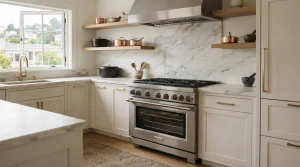
A range is a cooktop on top of an oven, and a failure in either half can stall dinner. A burner clicks and never lights, an element stays cold, the oven display flashes an F-code, or the door stays locked after a cleaning cycle. We repair GE and GE Profile freestanding and slide-in ranges and cooktops throughout San Francisco and the Bay Area. We begin with a look at the range where it stands, you get the estimate on paper, and work starts only when you say so.
Because ranges come in electric, gas and induction versions, the first question we ask is what powers yours. Everything else, from which checks are safe to what a diagnosis involves, follows from that answer.
| What you notice | What you can look at | What it may mean |
|---|---|---|
| Gas burner clicks but no flame | Burner cap seated, food or spill around the burner ports, cap dry | A wet or dirty burner head, a weak igniter, or a gas-side fault |
| One electric element cold, others fine | Is it plugged in fully on a coil style? Do other elements heat? | A failed element, its receptacle, or its switch |
| Whole range dead | Breaker, GFCI where applicable, display lit or dark | Power supply problem or a control fault |
| Oven will not heat, cooktop works | Clock set, controls not locked, door closed | A bake or broil element, a sensor, or the control |
| F-code flashing | Read it and write it down | Depends on the code, see the list below |
| Door locked after self-clean | Let the oven cool down and wait | The latch is waiting on a signal, or a lock circuit fault |
| Induction surface beeps, pan not recognized | Pan base flat, clean, centered on the zone | Cookware not suitable, or a surface fault |
If you smell gas, do not light anything, do not switch lights or the range on or off, and do not look for the leak. Walk out of the home and ring the gas utility from the sidewalk or a neighbor’s place. That is a hard rule; the owner never touches gas fittings, the shutoff behind the range, or the flexible connector, and we do not ask you to. The steps are laid out in gas smell near a GE range.
If there is no gas smell and a burner only clicks, remove the grate and burner cap, check that the cap sits flat and is fully dry, and brush loose crumbs off the burner head with a dry, soft brush. A cap that is slightly off center is a very common reason for clicking without a flame, and so is boil-over residue plugging the ports. Replace the cap carefully and try again. If it still clicks, read the burner that keeps clicking but does not light and book a diagnosis. Gas models on this site include the GE GGF400PVBB, GE GGF500PVBB and GE JGB250DETBB, all 30-inch.
Electric surface elements either lift out of a receptacle (coil style) or sit under a smooth glass top. For a coil element, make sure it is cool and unplugged from the range before reseating it, since a loose connection can cause one dead spot. You can check that the breaker is on. You cannot test the element or the switch yourself, and you should not open the back panel or probe the terminals. Electric models we list include the GE JBS360RTSS, GE JBS460DMBB, GE GRF500PVES, GE GRS500PVBB and GE GRF400SVSS, all 30-inch.
Induction ranges, available in the GE Profile line, heat the pan itself rather than the glass. If a zone will not start, the pan is the first suspect: it should have a flat, clean base and sit centered on the marked zone. A pan that is warped or too small may not register. Spills on the glass are worth wiping when it is cool. Anything beyond that, such as a zone that stays dead with several pans, is a diagnosis job.
Ranges with electronic oven controls show codes that begin with F. For nearly all of them, GE’s guidance is to call a trained service technician, and what you can do is note the code and take the oven out of use. The meanings we can state:
The complete list is on our error codes page. Two of these deserve a second thought. F2 means heat got out of hand, so turn the oven off and leave it off. F9 or FC after a cleaning cycle often arrives together with a door that will not unlock; the post on a door locked after self-clean explains the waiting period before you assume a fault.
A range is really three systems sharing a cabinet: the surface, the oven, and the electronics that run both. A cold element, a flame that will not catch and an oven that will not heat are separate problems with separate causes, and the display may blame the control when the real trouble is a sensor. We check the surface and oven independently, read any code, and test only what the symptom suggests. Then you see the written estimate, with the failed part named, and you decide. For the most frequent oven-side complaint, see the GE oven that preheats slowly.
San Francisco kitchens are often small and tight; many ranges sit in a slot between two cabinets, and pulling one out to reach the back is a two-person job. In older Victorians the gas shutoff may sit behind the range in a spot that is hard to reach, which is why we tell you to leave rather than hunt for it if you ever smell gas. Condos may require that building staff know about repair visits. In a fog-belt kitchen near the ocean, damp air and cooking steam can leave burner heads sticky, so cleaning them matters more than people expect. Remodeled kitchens that moved a range onto a new circuit or a new gas stub deserve a mention when you book.
Stop at once for a gas smell, a flame that burns yellow and tall or leaves soot, sparking from a surface element, a burning smell with no food on the stove, an F2 code, or a breaker that trips every time the oven starts. Turn off the burners and the oven, ventilate if you can do it without a switch, and do not keep cooking. With gas, getting out of the house comes before any phone call.
Write down the model number from the label on the range frame, usually along the oven door edge or on the back, and note whether it is gas, electric or induction. Our note on what to note before booking range or wall oven repair lists the details that make the first visit productive. Clear the area in front of the range. Further detail on the products is in the GE range guide, and wall-mounted units are covered under GE wall oven repair. Book from the contact page, online or by phone.
Often the cap is off center, wet or dirty. Seat it, dry it and try again. If it still will not light, the igniter or gas side may be at fault and needs a diagnosis. A gas smell changes everything: out of the house first.
Often yes, because the two work separately. The exception is a code or smell that suggests a shared fault, such as F2 or a burning odor. When in doubt, stop.
Yes. Check that your pan is flat and centered first. If a zone still fails with different pans, we diagnose it.
Write down the code and which function was running, turn the oven off, and book. GE directs most F-codes to a trained service technician.
A guide to GE and GE Profile ranges, covering electric, gas and induction types, model prefixes, fault codes and care.
Repair for GE and GE Profile dishwashers that will not drain, fill, clean or start, across San Francisco and the Bay Area.
Repair for gas and electric GE dryers across the city and the Bay, starting with a look at your vent and a…
Repair for GE upright and chest freezers in garages and kitchens around San Francisco and the Bay Area.
Repair for ice makers built into GE refrigerators and for GE Profile Opal countertop nugget ice makers in San Francisco and the…
GE microwaves of every kind, from over-the-range to Advantium, checked at your home with a written quote ahead of repair.
Repair for GE and GE Profile range hoods, over-the-range vents and chimney hoods in San Francisco kitchens.
Share a few details and we’ll confirm an appointment. Prefer to talk? Call us and we’ll help right away.